Generative Engine Optimisation: Mastering the New Era of AI Search
Generative Engine Optimisation: Mastering the New Era of AI Search
The traditional SEO playbook is undergoing its most radical transformation. As of early 2026, Generative Engine Optimisation has shifted the digital battlefield from standard search results to AI-driven summaries. For London’s premier brands, the goal is no longer simply to rank; it is to be the authoritative source that AI models cite as the absolute truth.
Why Generative Engine Optimisation Matters for London Brands
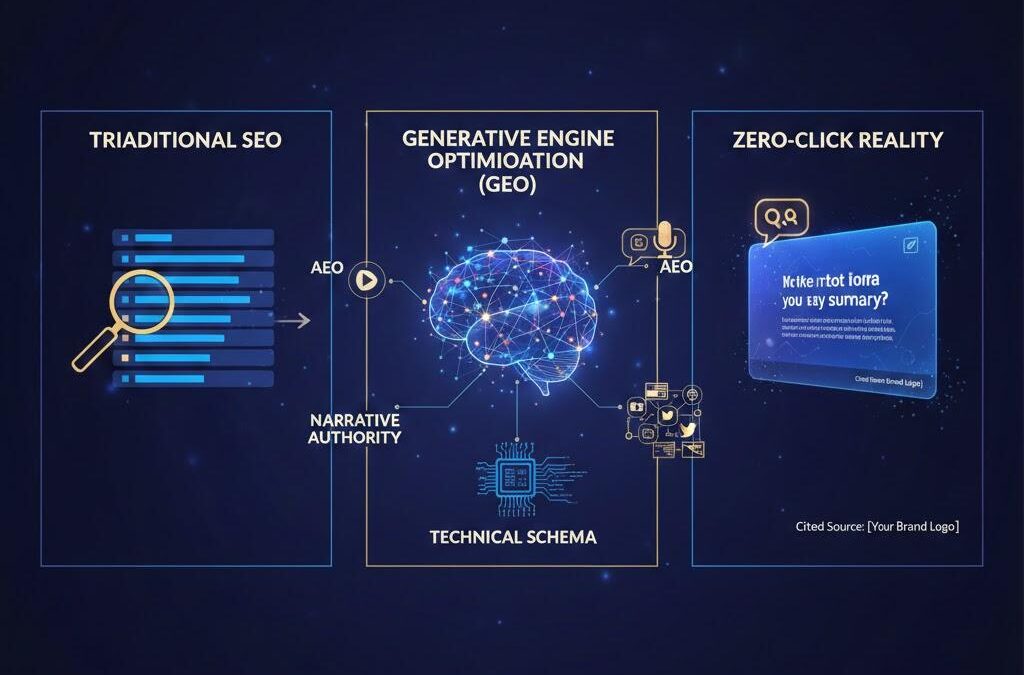
Generative Engine Optimisation (GEO) is the strategic process of making your brand’s content more likely to be included in AI responses. Unlike old-school SEO, this new frontier prioritises conceptual authority.
In the London market, where “Zero-Click” searches now account for over 60% of mobile traffic, mastering AI Search Optimisation is the only way to stay visible. If you are not appearing in the generative summary, you essentially do not exist to the modern consumer.
The Strategy Behind Answer Engine Optimisation (AEO)
A core pillar of this new search frontier is AEO. This involves structuring content to answer complex queries directly. By using a “Claim-Evidence-Data” format, you make it easier for AI models to extract your insights.
Furthermore, Generative Search Optimisation relies on semantic relevance. You must ensure your site’s technical schema is perfect so that search engines can verify your London-based expertise instantly. By providing structured data, you allow AI agents to parse your “Brand Narrative” without friction, which is the secret sauce for appearing in high-intent search summaries.
Adapting Your Content for the UK Market
Success in the current landscape requires more than just technical tweaks; it requires a shift in editorial tone. UK consumers are increasingly looking for transparent, expert-led advice that cuts through the noise. When creating content for your London audience, ensure you are referencing local case studies, UK-specific regulations (such as GDPR or CMA guidelines), and British industry standards.
AI engines prioritize “Information Gain”—the concept of adding new, unique value to the existing conversation. If your blog post simply repeats what is already on Wikipedia, the generative engines will ignore you. Instead, lean into Wowspot’s data-first approach: use original insights from your paid social campaigns and visual production metrics to provide a perspective that an AI cannot find anywhere else.
Key Takeaway: To win in 2026, brands must pivot from “keyword matching” to “knowledge providing.” If your content doesn’t offer a unique, data-backed perspective that an AI can verify, it won’t be seen. Generative Engine Optimisation is about building a digital narrative so strong that an AI engine cannot ignore it.
For more insights on our recent projects, view our [Social Media Management] services or contact our London team.
